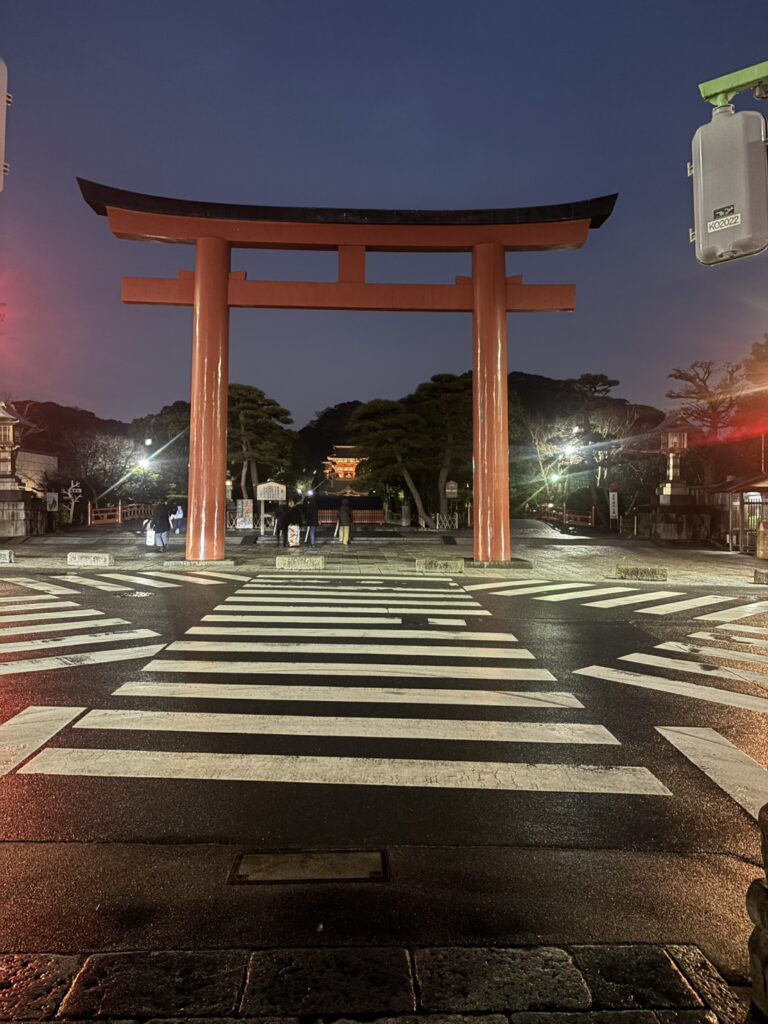
Most visitors come to Tsurugaoka Hachimangu for the grand staircase and the vermilion halls. But this shrine is far more than a photo stop — it sits at the very heart of Kamakura’s history, as the spiritual center of Japan’s first samurai government, the place where the Minamoto shogun line came to a violent end, and a witness to the sudden fall of the city itself. Here’s what this shrine means, and how to experience it the way locals do.
The History
The Heart of the Samurai Capital
Tsurugaoka Hachimangu was established by Minamoto no Yoritomo, the founder of the Kamakura shogunate, who placed it at the spiritual core of his new capital. For the Minamoto clan, this was not simply a shrine — it was the very symbol of their rule.
Where the Minamoto Line Ended
It was also where that rule came undone. In 1219, the third shogun, Minamoto no Sanetomo — Yoritomo’s son — was assassinated on these grounds by his own nephew, Kugyō, the son of the second shogun Minamoto no Yoriie. With Sanetomo’s death, the Minamoto shogun line was extinguished, only a generation after it had been founded. To stand here is to stand where the Minamoto shoguns both rose and fell.
A Fortress That Fell in Two Weeks
For nearly 150 years, Kamakura stood as the seat of Japan’s first samurai government — a capital chosen for its natural defenses, with mountains on three sides, the sea on the other, and only a handful of narrow passes leading in. It was said to be almost impossible to attack, and for generations it wasn’t.
Then, in 1333, it fell in about two weeks. As Ashikaga Takauji — later the founder of the next shogunate — turned against the ruling Hōjō and seized their headquarters in Kyoto, his distant kinsman Nitta Yoshisada marched on Kamakura itself. Unable to force the mountain passes, Nitta swung around to the beach at Inamuragasaki and broke through along the shore at low tide. Within days the city was overrun, and the Kamakura shogunate — the power that had ruled Japan for a century and a half — was gone.
The capital that was supposed to be unconquerable had been undone by the very sea meant to protect it.
Dankazura: The Approach Most Visitors Rush Through
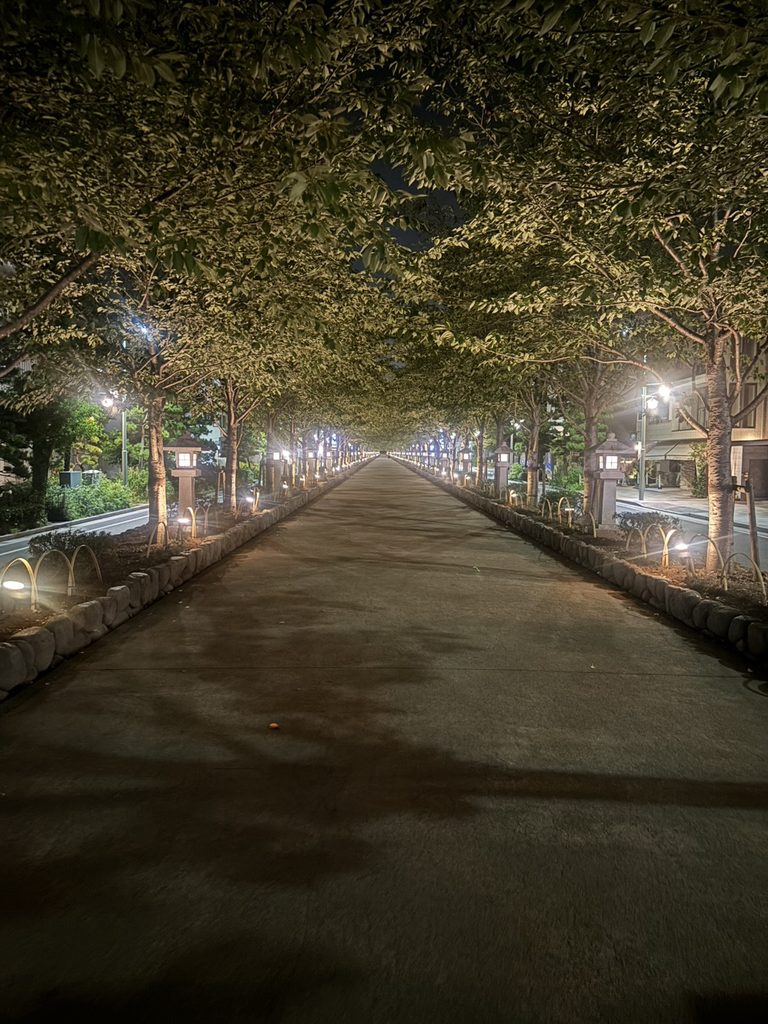
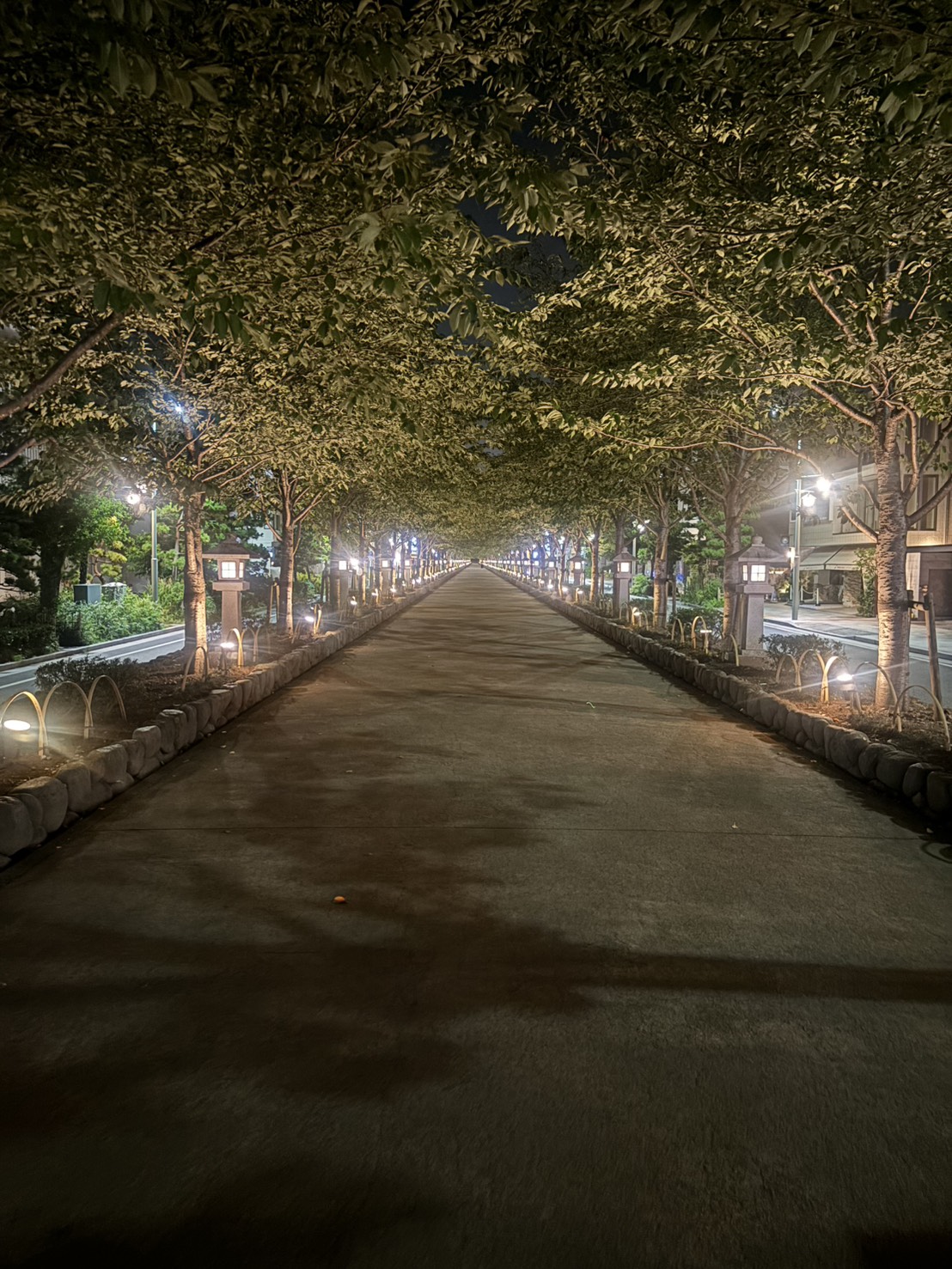
From Kamakura Station toward the shrine’s great torii gate runs Dankazura — a raised, walkable path down the center of the road, lined with stone lanterns. By day it’s busy, but go at night and you may have it almost entirely to yourself. Lit by the lanterns, with the crowds gone, it becomes one of the most beautiful and quietly powerful walks in Kamakura. If you visit between late summer and autumn, you’ll catch it at its finest.
What to See
The Sandō (inner approach)
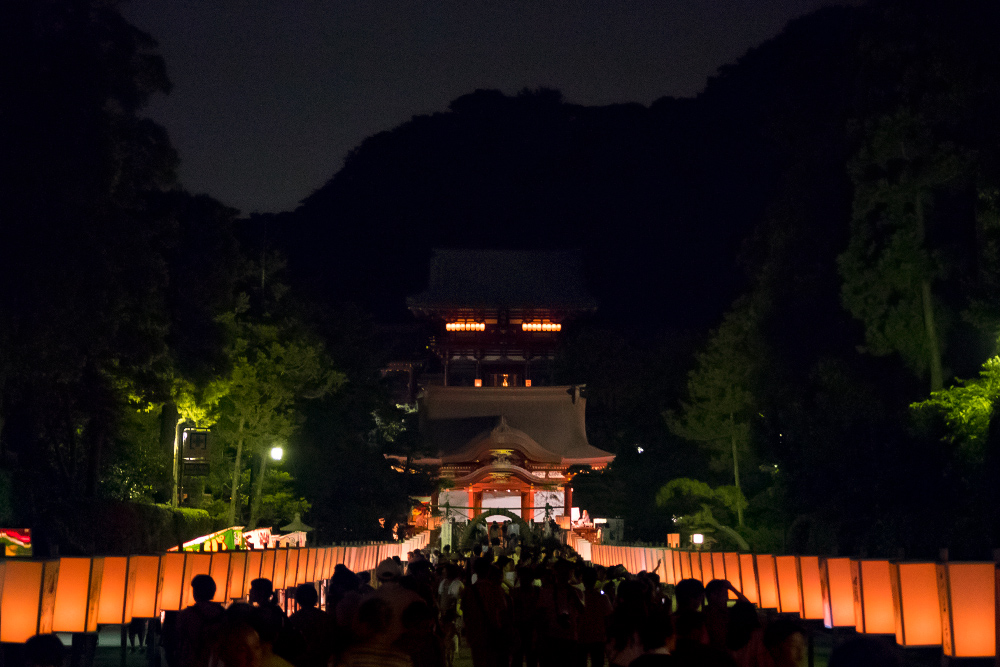
Once you pass through the torii, a tree-lined approach leads through the grounds toward the main hall. Walking it slowly — rather than rushing to the steps — is part of how locals experience the shrine.
The Main Hall (Hongū)
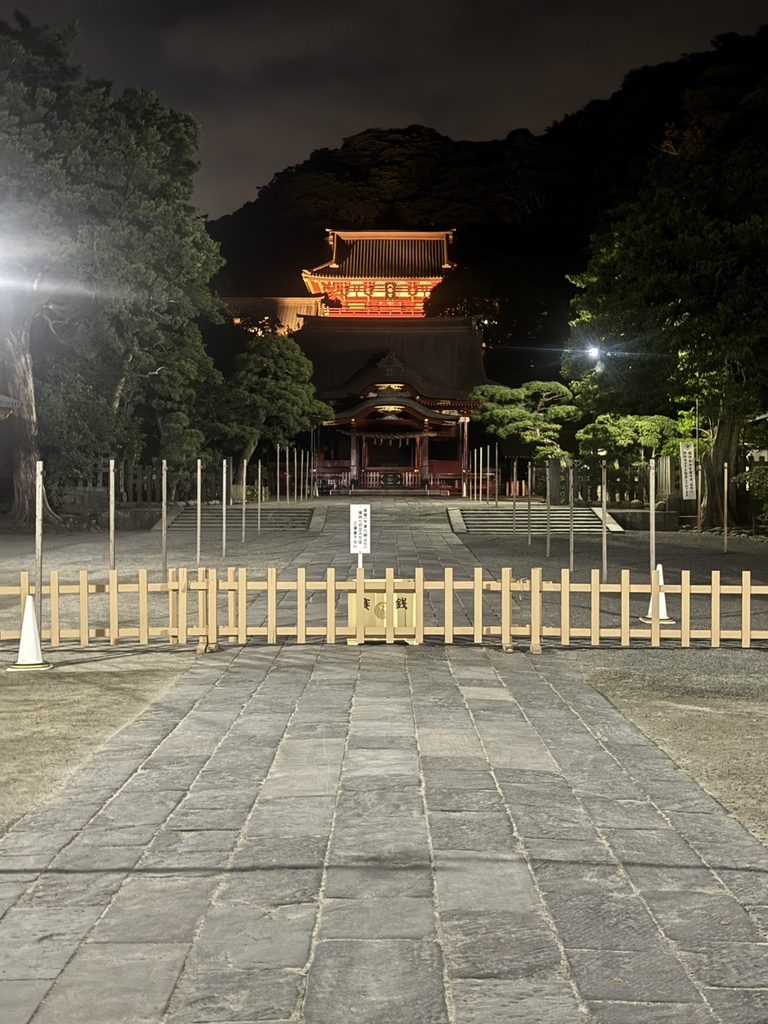
At the top of a wide stone staircase stands the main hall, painted in striking vermilion. Climbing the steps and looking back over the grounds gives you the same commanding view the shrine’s founders intended — a reminder that this was the ceremonial heart of a warrior government. In the quiet of early evening, before closing, the hall has a stillness that daytime crowds never let you feel.
The Maiden (dance stage)
The open-sided stage in the center of the grounds is tied to one of Kamakura’s most famous legends and is still used for ceremonies today.
Experience It Deeper
Tsurugaoka Hachimangu rewards visitors who understand its story. If you want to go beyond the surface, a local walking tour of historic Kamakura brings the shogunate era to life — connecting this shrine to the wider city in a way a guidebook can’t.
[→ 歴史街歩きツアーのアフィリエイトリンク:MagicalTrip / Japan Experience]
Getting There
Tsurugaoka Hachimangu is about a 10-minute walk from Kamakura Station, straight up Dankazura. From central Tokyo, the ride takes roughly an hour.
If Kamakura is part of a longer trip around Japan, a rail pass can save you money on the journey here and beyond — worth checking before you travel.
[→ 交通パスのアフィリエイトリンク:JRPass 等]
Practical Info
- Hours: Open daily, 6:00 AM – 8:00 PM
- Best season: Late summer into autumn, when the approach and grounds are at their most beautiful.
- Time needed: Around 45 minutes to an hour to enjoy it properly.
- Getting there: ~10 min walk from Kamakura Station; ~1 hour from central Tokyo.
- Local tip: Walk Dankazura in the evening for the lanterns — and far fewer people.
コメントを残す